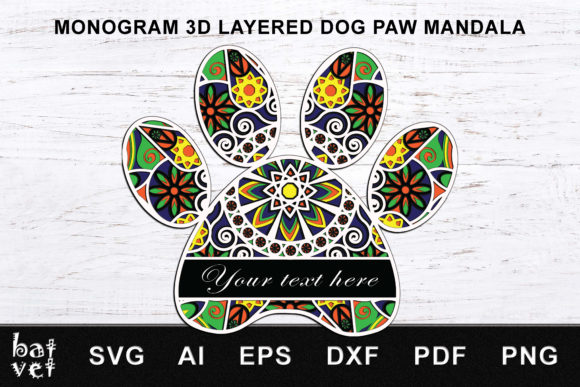
Monogram Dog Paw 3D Layered Mandala Review
As a professional embroidery designer and product reviewer, I approach every new digital asset with a critical eye. When evaluating the Monogram Dog Paw 3D Layered Mandala, my first thought is not just about how pretty the vector lines look on a screen, but how they will translate into thread, texture, and tangible value for a client. This design sits at an interesting intersection of trends: it combines the enduring popularity of pet-themed merchandise with the intricate visual depth of mandala art and the structural complexity of 3D layering. While the product description highlights its utility for shadow boxes and cutting files in formats like SVG, AI, DXF, EPS, PDF, and PNG, my focus here is strictly on its viability as a foundation for high-quality machine embroidery projects.
First Impressions and Visual Hierarchy
The immediate strength of this monogram dog paw mandala is its balanced geometry. In embroidery, symmetry is forgiving, but organic shapes within that symmetry can be tricky to stabilize. This design manages to keep the paw shape recognizable while integrating the repetitive, meditative patterns of a mandala. For a crafter or Etsy seller, this visual personality suggests warmth, nostalgia, and premium craftsmanship. It does not feel like a generic clip-art outline; it feels like a deliberate composition intended to be a centerpiece.
However, because this is marketed as a "3D Layered" file with six distinct layers, we must address the translation from paper craft to textile art. In the world of shadow boxes, layers are separated by foam spacers. In embroidery, we simulate this depth through stitch density, fabric appliqué, and strategic shading. The provided Illustrator AI master file is a significant asset here. It allows us to isolate specific elements of the mandala to create separate appliqué designs or adjust fill stitch areas without redrawing the entire motif. This flexibility is crucial for adapting a complex digital file into a functional embroidery file that respects the limitations of thread and fabric.
Real-World Application: The Custom Pet Memorial Tote
To truly test the commercial viability of this design, I mentally prototyped a specific project: a custom embroidered tote bag intended as a personalized gift for a pet owner. Tote bags are a staple for small shop products and craft business inventory because they offer a large, flat canvas that showcases detail well.
In this scenario, the Monogram Dog Paw 3D Layered Mandala serves as more than just decoration; it acts as a framing device for the pet’s name. The six-layer structure provides a natural roadmap for color blocking. I envision using a heavy-weight canvas stabilizer to support the design. The outermost mandala ring could be executed in a dense satin stitch border to define the edge, while inner layers utilize varying fill stitch patterns to mimic the physical depth of the original 3D SVG concept. By utilizing different thread colors with varying sheen levels—perhaps a matte cotton for the base and a rayon or polyester for the top layers—we can achieve a tactile 3D effect that rivals the paper version.
For an Etsy seller, this application increases perceived value. A flat, single-color print looks mass-produced. A multi-layered, textured embroidery piece that utilizes the mandala’s complexity signals "handmade product" and justifies a higher price point. The inclusion of high-quality PNG files also aids in creating accurate printable mockups for listings before you even hoop the fabric, streamlining the workflow for digital product sellers who offer custom proofs.
Navigating Fabric Constraints and Stabilization
While the design is versatile, it requires careful consideration regarding where it should not be used. The intricacy of a layered mandala means there is significant stitch count potential. I would advise against using this specific design on stretchy fabrics like lightweight jersey knits or performance wear unless you are an expert in stabilization. The tension required to hold six conceptual layers of detail can cause tunneling or distortion on unstable fabrics.
Similarly, curved surfaces like caps present a challenge. Mandalas rely on perfect circular geometry; when wrapped around a cap brim or crown, the distortion can break the visual harmony of the paw shape. For headwear, I would recommend simplifying the design using the AI master file to remove at least two outer layers, reducing the footprint and density.
Dark fabrics also require a strategy shift. If you are stitching this onto a navy sweatshirt or black apron, the interplay of layers might get lost if the thread colors lack sufficient contrast. In these cases, the design assets should be modified to include a white or light-colored underlay or background fill to make the mandala pop. Always check your stitch density settings; too much overlap in a 3D-style embroidery build-up can lead to needle breaks or stiff, bulletproof results that ruin the drape of a garment.
Commercial Value and Brand Consistency
For creative entrepreneurs and boutique owners, consistency is key to brand recognition. The Monogram Dog Paw 3D Layered Mandala offers a cohesive aesthetic that can span multiple product categories. Because you receive vector formats (AI, EPS, SVG), you can scale this design from a tiny embroidered patch for a jacket sleeve to a massive pillow cover without losing line integrity. This scalability ensures that whether a customer buys a baby bib or a holiday ornament, the design language remains consistent.
Furthermore, the "monogram" aspect drives buyer engagement. Personalization is the primary driver for handmade sales. This design creates a dedicated space for that personalization without it feeling tacked on. The integration of the name into the paw/mandala structure makes the finished product feel bespoke rather than customized. For commercial embroidery businesses, this reduces the need for extensive digitizing edits per order, as the layout is already optimized for variable text placement.
Essential Designer Notes for Success
Before listing this design in your shop or starting a client commission, adhere to these practical guidelines:
- Test Stitch Mandatory: Never run this design directly on a final product without a test sew-out. The interaction between the six conceptual layers needs to be verified physically. Check for registration issues where layers meet.
- Verify Licensing: The product description lists file formats but does not explicitly state commercial licensing terms for finished embroidered goods versus digital redistribution. Always confirm whether you can sell the physical embroidered items or if the license restricts you to personal use only before launching a new product line.
- Stabilizer Selection: Given the potential density of a layered mandala, use a cut-away stabilizer for apparel and a heavy tear-away or wash-away for towels. Do not rely solely on spray adhesive; mechanical hooping is necessary to maintain the geometric precision of the mandala.
- Thread Color Planning: Use the PNG files to plan your thread palette digitally before purchasing supplies. Ensure you have enough contrast between layers to distinguish the 3D effect. Tone-on-tone schemes look elegant but require precise stitching; high-contrast schemes are more forgiving of minor alignment shifts.
- Hoop Size Verification: Confirm the dimensions of the design against your machine’s maximum hoop size. If resizing is necessary, do so in your embroidery software, not just by stretching the vector file, to maintain proper stitch density ratios.
- Mockup Accuracy: When using the included PNGs for digital previews, ensure they accurately represent the texture of embroidery. Misleading customers with flat vector images when selling textured thread work leads to returns and negative reviews.
Final Verdict for Makers
The Monogram Dog Paw 3D Layered Mandala is a robust design asset for those willing to bridge the gap between digital layering and textile construction. It excels in applications where detail and sentimentality drive value, such as memorial gifts, boutique pet accessories, and premium home decor. Its success lies not in simply stitching it out as-is, but in leveraging the provided master files to adapt the 3D concept into a medium-specific embroidery masterpiece. For the thoughtful maker who respects the technical demands of stitch density and fabric stability, this design offers a pathway to distinctive, high-margin products that stand out in a crowded marketplace.